
Electronic Genome Mapping in Assessment of Process-Induced Genetic Alterations in Human T Cell-Derived iPSCs

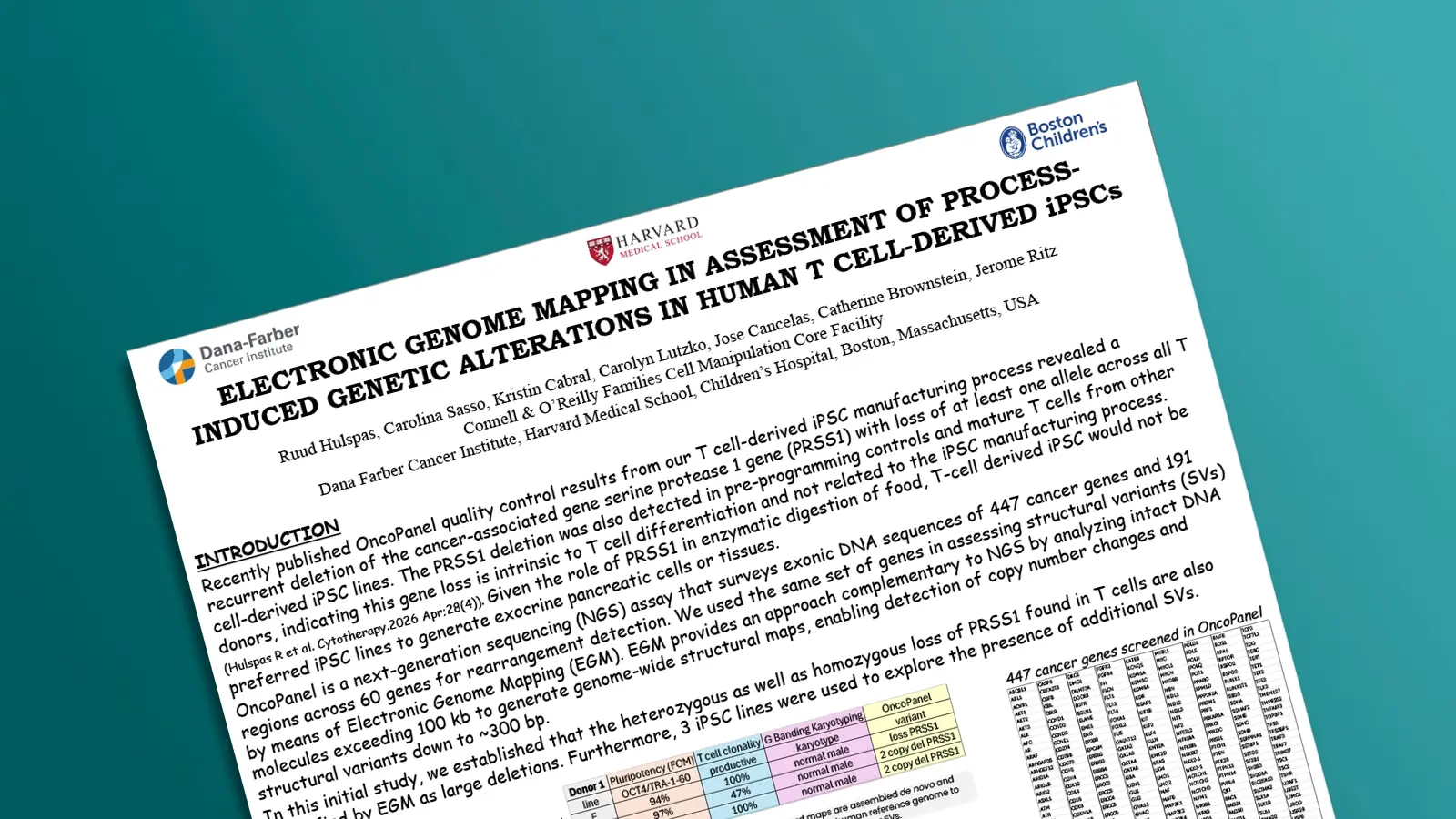
Quality control screening of T cell-derived induced pluripotent stem cell (iPSC) lines using next-generation sequencing has revealed a recurrent deletion of the cancer-associated PRSS1 gene—a loss intrinsic to T cell differentiation and present across all lines tested. This study asked whether electronic genome mapping (EGM) could provide orthogonal confirmation and greater resolution on structural variants (SVs) in these iPSC lines beyond what sequencing alone can reveal.
Researchers used EGM to analyze DNA extracts from three T cell-derived iPSC lines alongside pre-reprogrammed T cell controls, identifying and confirming SVs using the SV-Verify™ pipeline. Analysis confirmed both heterozygous (473 kb) and homozygous (186 kb) PRSS1 deletions and uncovered additional SVs in cancer-associated genes—including POLE, DNMT3A, and FGFR2—not readily captured by sequencing alone.
Explore the full findings from ISCT 2026 and see how combining long-range structural data with sequence-level information can power a more complete genomic characterization of T cell-derived iPSC lines.
Download Now







.svg)
