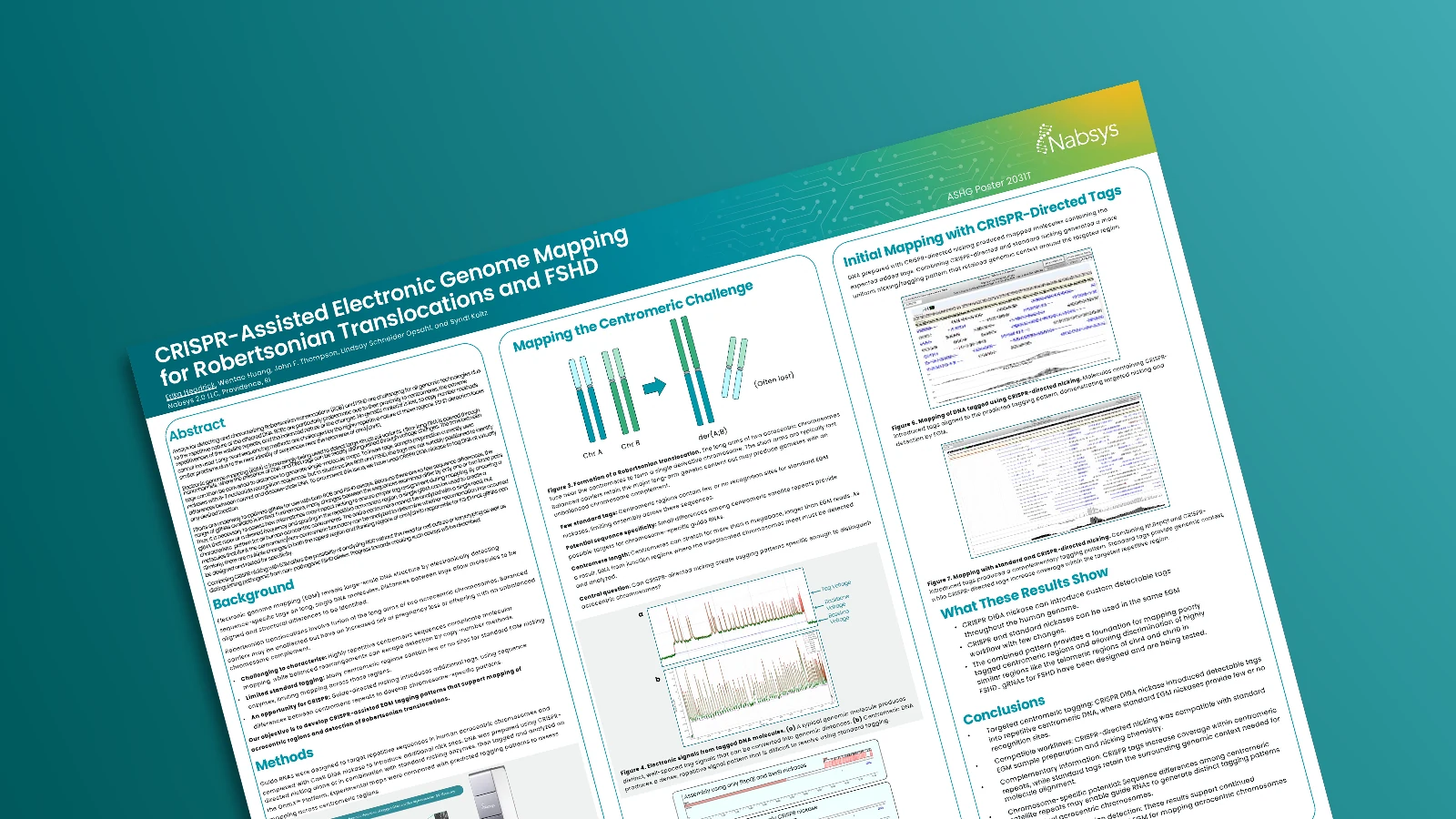
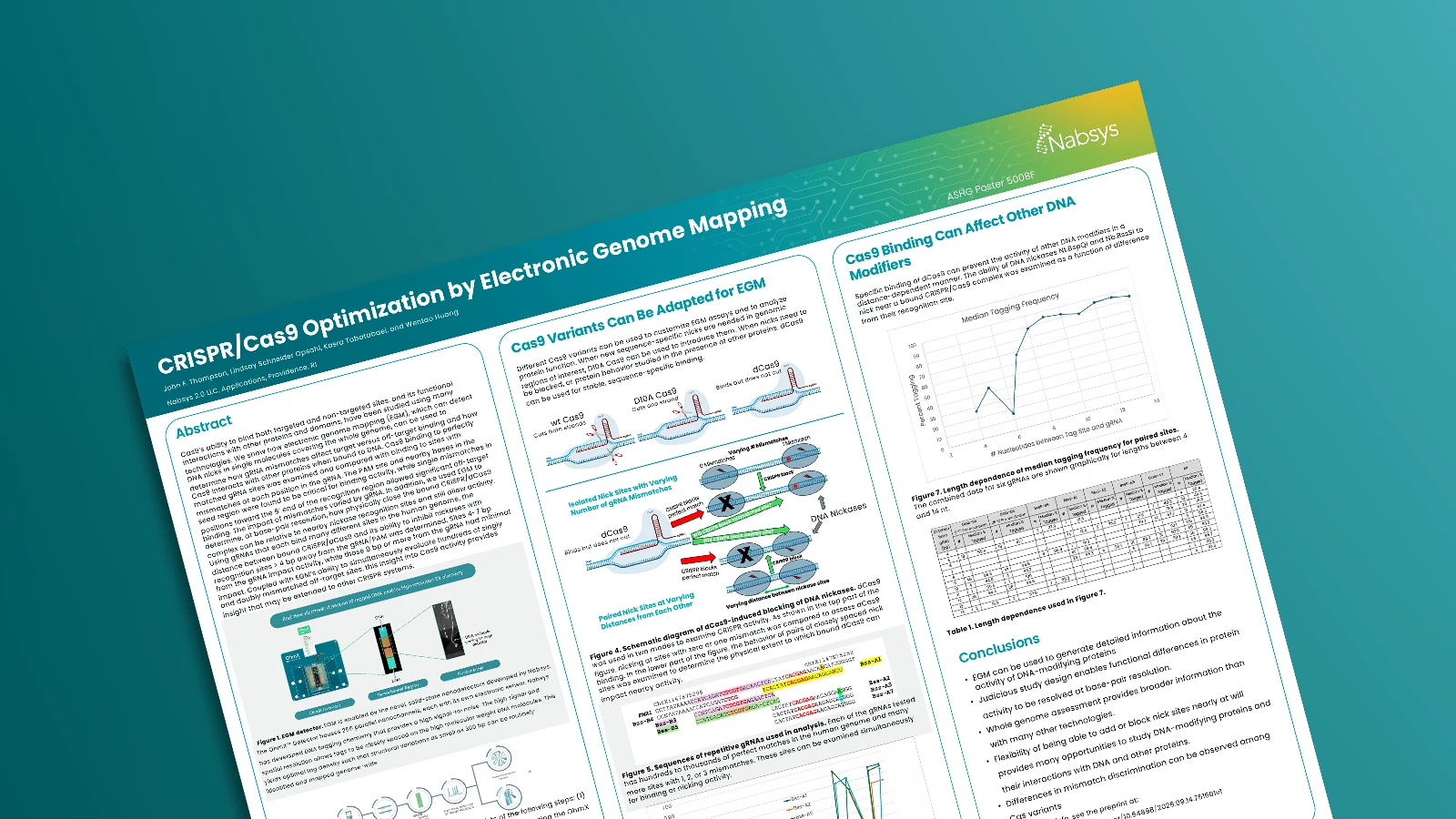
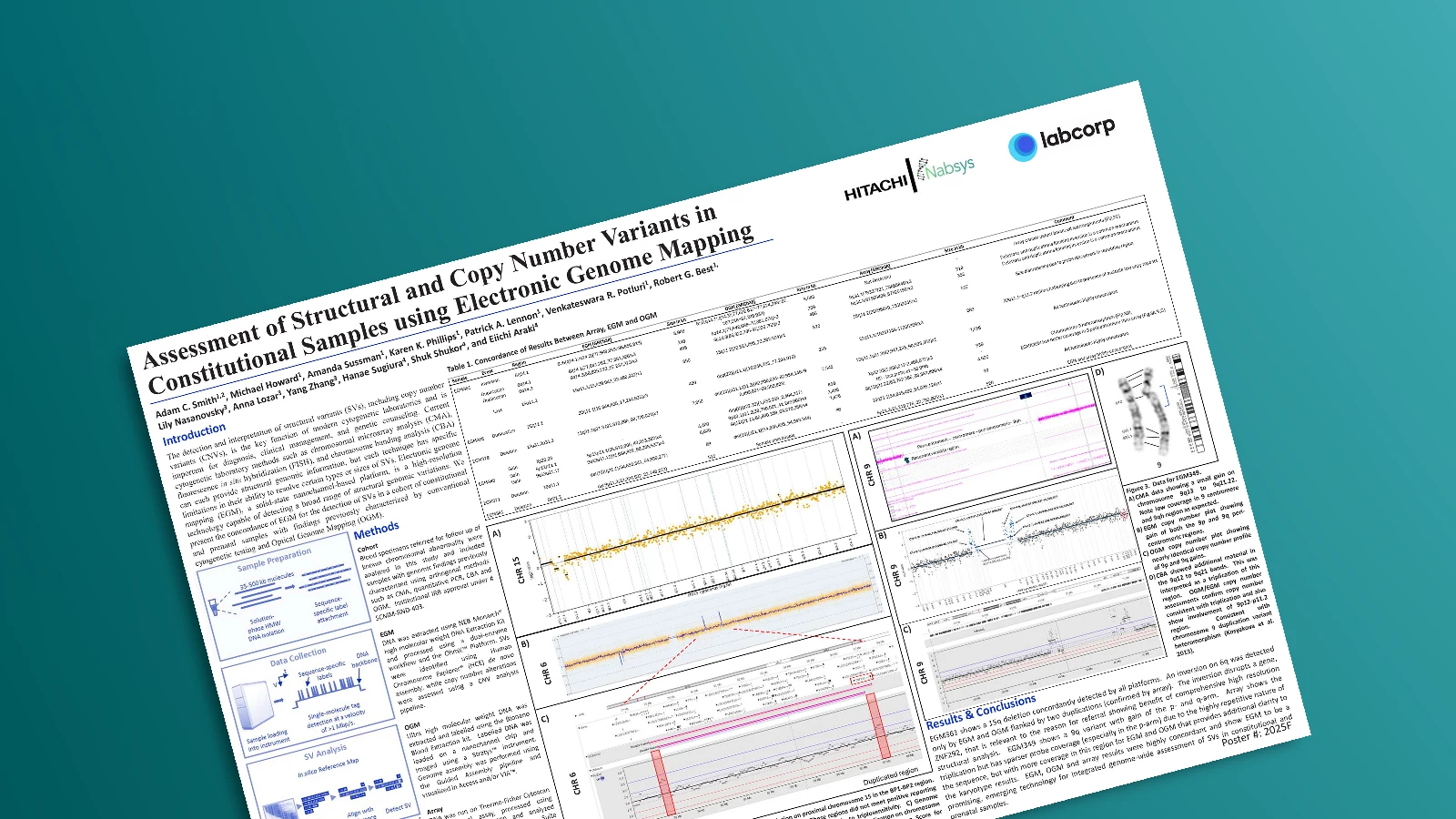
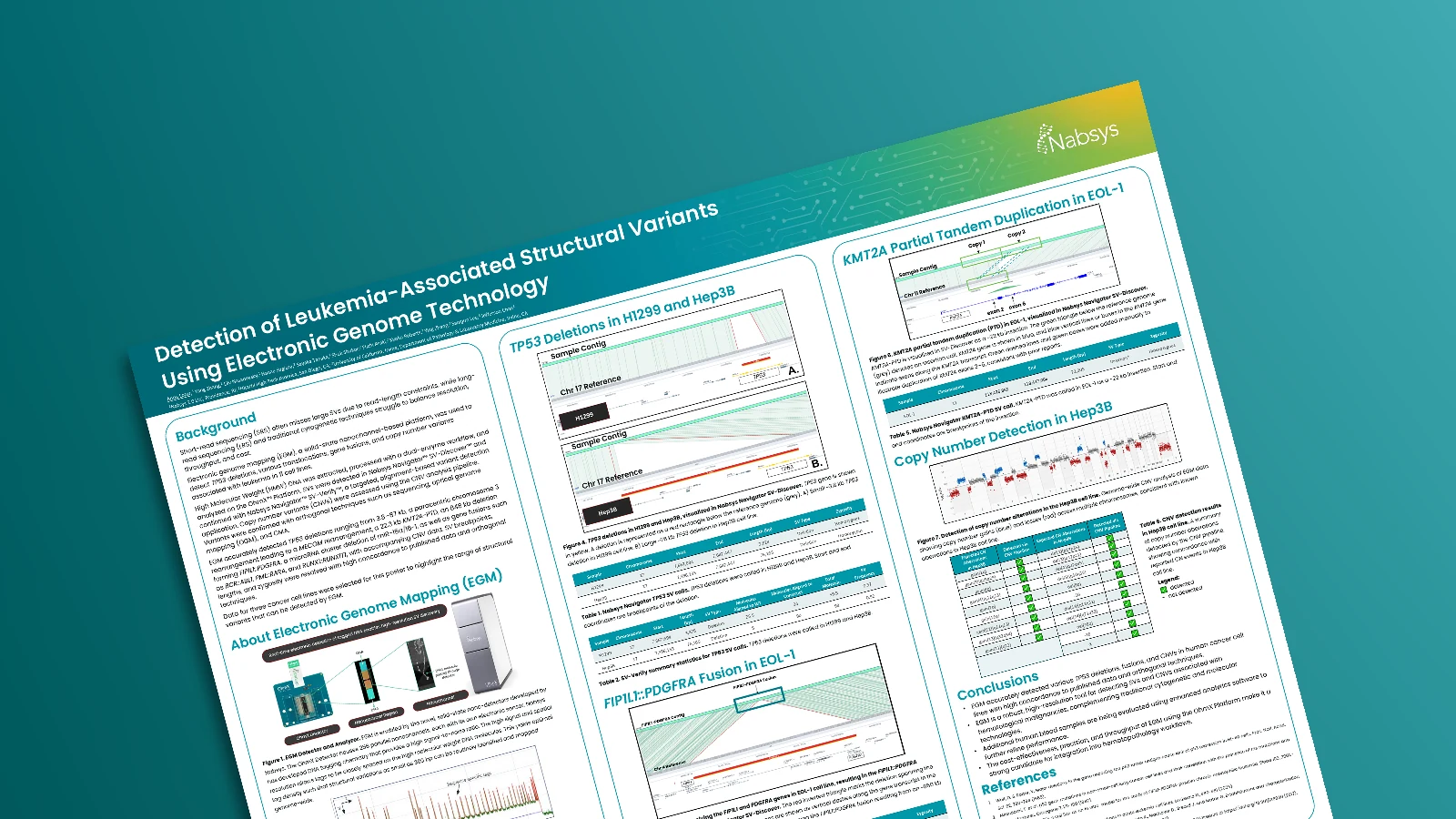
CRISPR-Assisted Electronic Genome Mapping for Robertsonian Translocations and FSHD

Robertsonian translocations fuse the long arms of two acrocentric chromosomes near their centromeres. Because the change is balanced and the surrounding satellite repeats are highly repetitive, it can escape both copy number methods and sequencing. This study examined whether CRISPR-directed nicking could give electronic genome mapping (EGM) tagging patterns specific enough to map acrocentric centromeres.
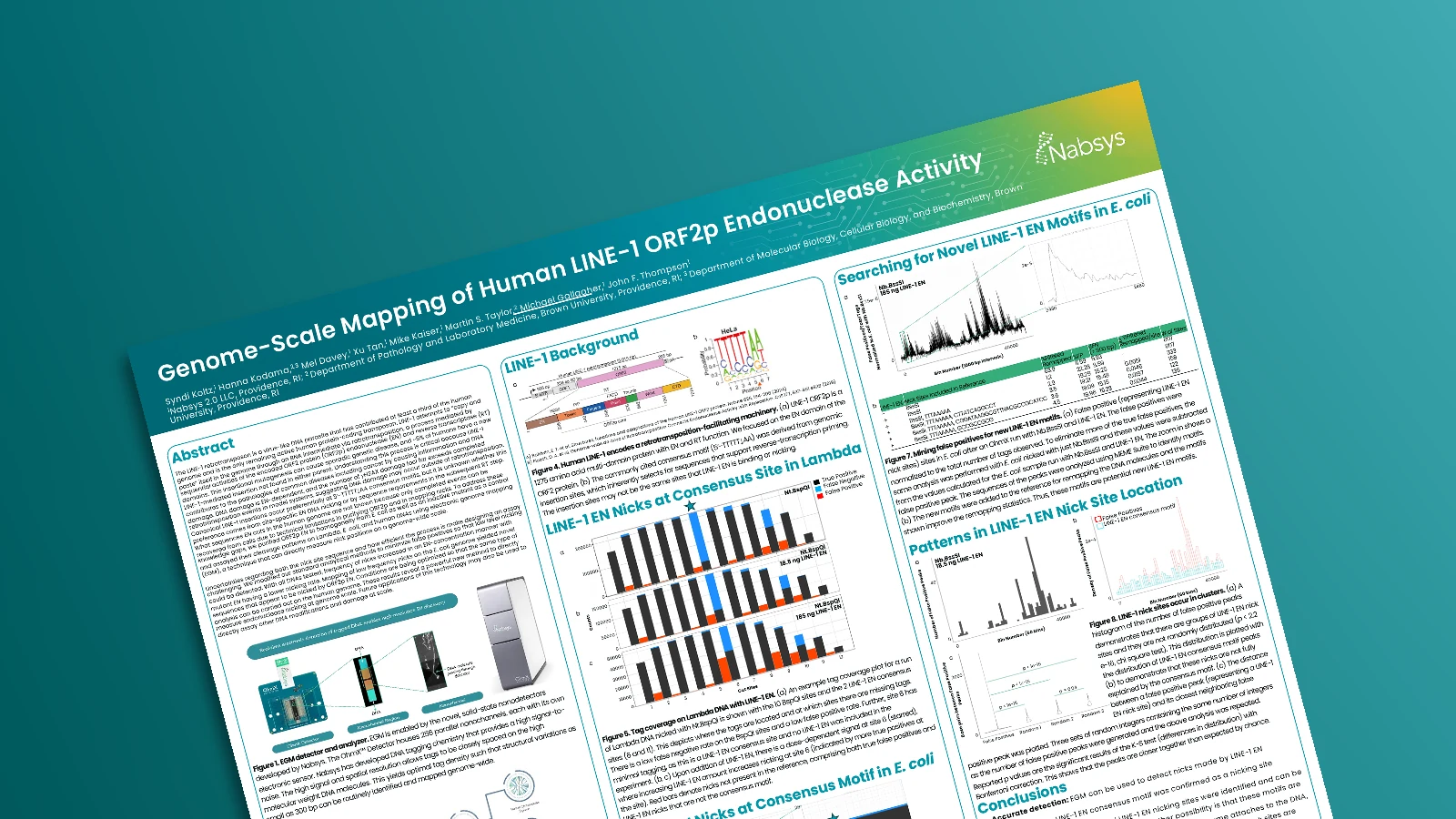
Guide RNAs targeting repetitive acrocentric sequences were paired with Cas9 D10A nickase, used alone or alongside standard nickases, and analyzed on the OhmX™ Platform. The poster shows how CRISPR-introduced tags appear in mapped molecules, how combined nicking compares with standard tagging across the centromere, and the next steps toward assays for Robertsonian translocations and facioscapulohumeral muscular dystrophy.
Explore how CRISPR-assisted EGM could open hard-to-map centromeric regions in your structural variant research.
Download Now