CRISPR/Cas9 Optimization by Electronic Genome Mapping

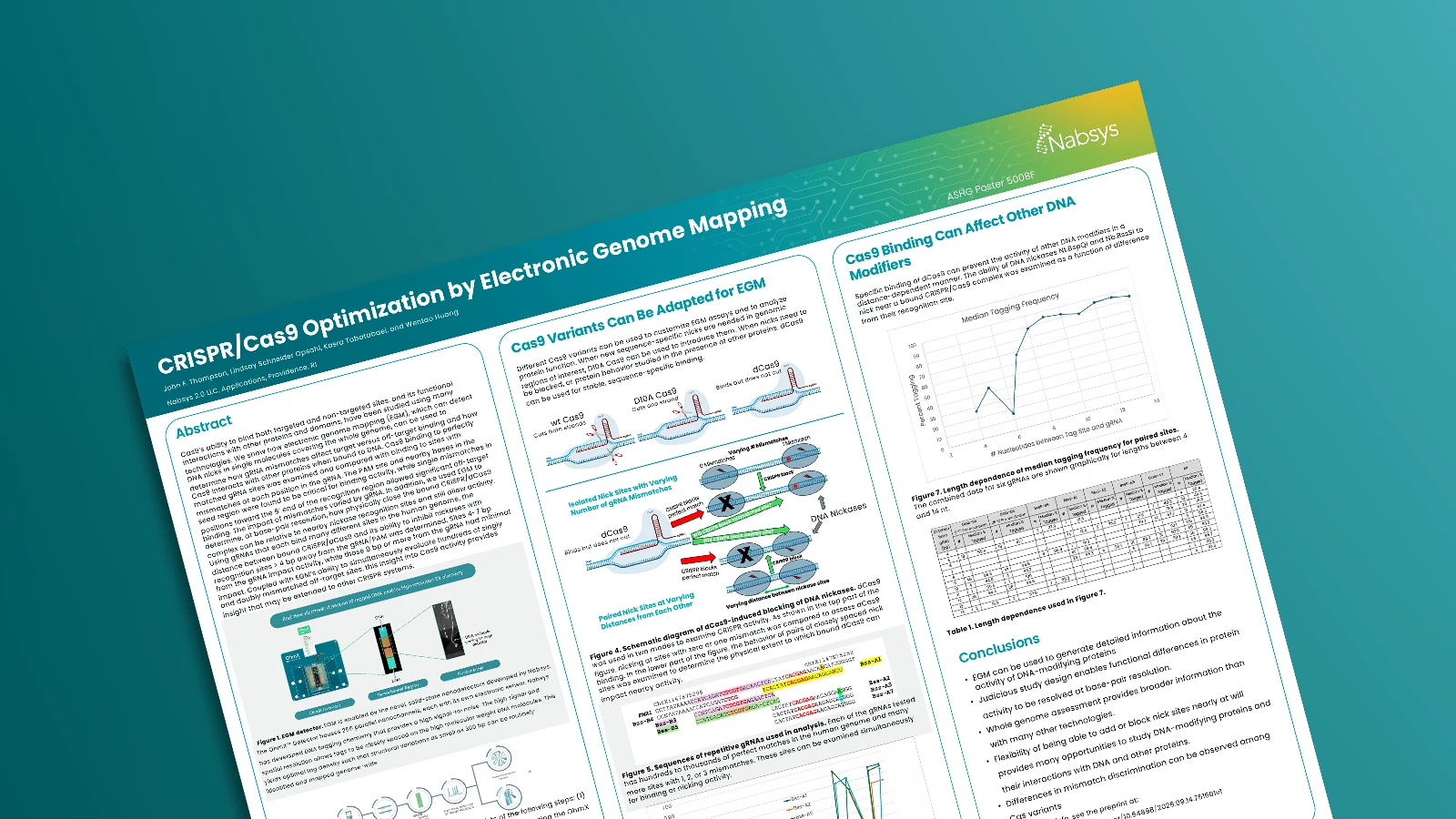
Knowing where Cas9 binds, on target and off, and how a bound complex affects nearby proteins matters for any CRISPR application. This study examined whether electronic genome mapping (EGM), which detects DNA nicks on single molecules across the whole genome, could measure these behaviors at scale.
Using repetitive guide RNAs with hundreds to thousands of matched sites in the human genome, the team compared nicking at perfectly matched sites with sites carrying single mismatches at each guide position. They also measured how close bound dCas9 could sit to a nickase recognition site and still block it. The poster shows which guide positions tolerate mismatches and how blocking changes with distance, base pair by base pair.
Explore how EGM can characterize CRISPR systems and other DNA-modifying proteins in your genome engineering research.
Download Now